Let’s be real, owning or managing a commercial property means there’s always something to handle, from keeping tenants happy to making sure the building stays in top shape. But one thing that should never be ignored on your to-do list is electrical safety.
That’s where an Electrical Installation Condition Report, or EICR, comes in. Consider it as a scheduled health checkup of your building’s electrical systems. Now, this brings up a common question: How often should you actually carry out an EICR? Is it something you sort out annually, every five years, or only when a problem arises?
This is a relevant question and needs to be addressed. A regular EICR doesn’t just comply with legal requirements; it also keeps people safe, protects your investment, and gives you peace of mind.
Whether you manage a shop, warehouse, or office building, knowing when to carry out an EICR is key to keeping your property safe, compliant, and legally protected. In this guide, you’ll learn what an EICR is, why it matters, how often it’s needed, who’s responsible, and what to expect during the inspection so you can stay ahead of electrical risks and meet safety standards with confidence.
What Is an EICR and Why Is It Important?
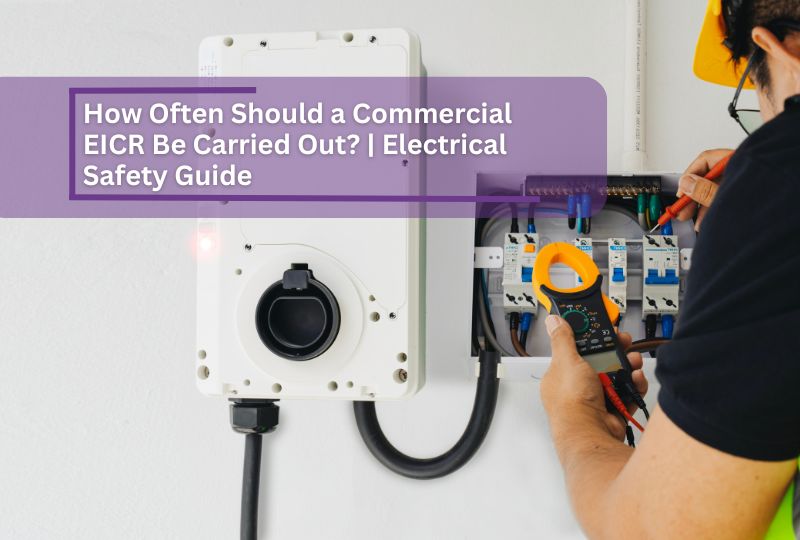
An Electrical Installation Condition Report (EICR) is a formal, detailed document that outlines the condition of a building’s fixed electrical systems. A qualified electrician carries out this inspection to evaluate the safety and performance of wiring, sockets, fuse boards, and other key components, ensuring the entire system meets current safety standards and operates as it should. It also helps identify potential issues early, allowing them to be addressed before they become costly or dangerous.
The importance of regular EICRs is clear from the data. In 2019–2020, the UK recorded over 18,000 fires in non-domestic buildings, with 4,495 occurring in commercial and industrial settings, and many of these fires were linked to electrical faults. By carrying out regular inspections, property owners can reduce these risks, safeguarding both people and property while keeping offices, shops, warehouses, and other commercial spaces safe and compliant.
By keeping electrical systems regularly checked, you not only reduce risks but also demonstrate responsibility and care for everyone in the building. For any business or commercial property, scheduling EICRs is a practical and essential step toward safety, compliance, and peace of mind.
Is an EICR Legally Required for Commercial Property?
In Scotland, commercial buildings like shops, offices, schools, or factories aren’t legally required to have an EICR. There’s no specific law that says you must get one. However, getting an EICR is still strongly recommended because it helps you stay on top of electrical safety and avoid unnecessary risks.
As a business owner or commercial property owner, you have legal responsibilities to ensure the safety of the building under key legislation, such as:
- The Health and Safety at Work Act 1974
- The Electricity at Work Regulations 1989
An EICR isn’t legally required, but it’s a great way to show you’re keeping things safe. Without one, you could face legal or financial consequences if someone gets hurt or there’s a fire, and insurance might not cover you without proof of proper checks.
How often should a Commercial Property Need an EICR?
Landlords are generally advised to have an EICR every five years, as this helps maintain electrical safety, compliance, and overall system reliability. However, the exact frequency can vary based on the type of business, the electrical load, and the condition of the building’s wiring. Properties with older systems or heavy-duty equipment may need EICR inspections more often to ensure everything remains safe.
It’s also important to arrange an EICR sooner if you’ve had major electrical work done or noticed warning signs such as flickering lights, burning smells, or frequent breaker trips. The same applies when taking over a new commercial property, as an early inspection gives you a clear picture of the system’s condition.
Lastly, review your lease agreement, since some commercial leases require tenants, not landlords, to handle or pay for the EICR. Understanding this upfront helps avoid confusion and unexpected costs.
Who’s Responsible for EICR in Commercial Properties?
In many commercial leases, the responsibility for arranging and paying for the EICR sits with the tenant rather than the landlord. This is different from residential lets, where landlords typically hold the responsibility. Commercial tenants are often expected to maintain the electrical safety of the areas they occupy, and this can include periodic EICR inspections. Because of this, tenants should carefully review their lease agreements to understand their obligations. Failing to comply could lead to unexpected costs, disputes with the landlord, or even issues with insurance if an electrical fault occurs.
What Factors Can Affect EICR Frequency?
The five-year guideline is a good starting point, but several factors can change how often a commercial property actually needs an EICR. The frequency depends on how your electrical system is used, the risks involved, and the overall condition of the building. Some of the main factors that can influence this include:
1. Age and Condition of the Electrical System
Older buildings or properties with outdated electrical systems usually need more frequent checks, as wiring and equipment degrade over time. According to Prysmian, most commercial cables are designed to last around 25–30 years under full load, but with lower daily use, they might last up to 40 years. However, factors like heat, moisture, or poor installation can shorten that lifespan significantly.
2. Changes in Who Uses the Building or What It’s Used For
If the use of a building changes, such as switching from storage to a busy office, or if new tenants with different electrical needs move in, you may need an EICR sooner than planned. Different types of activities place different levels of demand on the electrical system, which can affect safety. For instance, turning an office into a restaurant with commercial kitchen equipment introduces higher electrical loads and new risks. In such cases, it’s essential to carry out an updated inspection to ensure the system remains safe and compliant.
3. Type of Business or Work Done in the Building
Some businesses place more demand on their electrical systems than others. For instance, factories or workshops with heavy machinery typically need more frequent checks than a small retail shop. In fact, certain types of commercial environments, such as manufacturing facilities, data centres, medical practices, and businesses that store or use flammable items, often require annual inspections due to the higher level of risk involved. That’s why setting the right inspection schedule based on your building’s use isn’t just smart, it’s necessary.
What Happens during an EICR Inspection?
During an EICR, a qualified electrician visually checks all accessible parts of the electrical system, including wiring, sockets, and fuse boards. They then carry out tests to ensure everything is safe, working properly, and compliant with current regulations.
The inspection focuses on several key areas:
- Earthing & Bonding Check: The electrician verifies that your property has proper grounding to prevent electric shocks.
- Consumer Unit Test: Your fuse box is inspected to ensure it has the right safety devices (like RCDs) and is correctly labeled.
- Circuit Protection Check: All breakers and RCDs are tested to confirm they trip quickly enough in case of a fault.
- Wiring Inspection: The condition of cables is checked for damage, overheating, or outdated materials.
- Socket & Switch Test: Every outlet and switch is examined for loose connections, scorch marks, or wear.
- Safety Compliance Review: The system is compared to current regulations to ensure it meets legal requirements.
After the inspection, the electrician records any issues and assigns risk codes to help you prioritise action:
- C1 (Danger Present): Immediate action is needed as the system is unsafe and must not be used.
- C2 (Potentially Dangerous): Urgent repairs are required, though it’s not an immediate threat.
- C3 (Improvement Recommended): No immediate danger, but upgrades would enhance safety.
- FI (Further Investigation Needed): Something seems wrong and requires closer inspection.
This process gives a clear understanding of your electrical system’s condition and highlights what needs attention now and what can be planned for later.
What Are the Risks of Not Having a Valid EICR?
Skipping or delaying your commercial EICR might save you time in the short term, but it can lead to much bigger problems down the line. These risks aren’t just theoretical; they’ve already caused real problems for businesses across Scotland and the UK.
Legal and Financial Penalties
Under the Electricity at Work Regulations 1989, Scottish businesses are required to ensure their electrical systems are safe and properly maintained. Failing to comply can lead to legal action from the Health and Safety Executive (HSE), which has prosecuted many companies across the UK for electrical safety breaches. These fines can be significant, sometimes reaching tens of thousands of pounds. Beyond financial penalties, businesses also risk damage to their reputation and the stress of dealing with avoidable legal issues.
Risk to Occupants and Employees
The risk to people’s safety is even more serious. Faulty or outdated wiring can lead to electric shocks, power cuts, or even fires. According to Morgan Clark, around 19% of commercial building fires in the UK are caused by electrical faults, many of which could have been prevented with routine inspections like an EICR. These aren’t just numbers; they reflect real risks to your staff, customers, and anyone else in the building.
Insurance Invalidation
Insurance is another important factor to consider. Many providers require proof of regular electrical inspections to approve any claims. If a fire or fault occurs and you can’t show a valid EICR, your insurer might reject the claim altogether. That means your business could be left covering the full cost of repairs or even compensation.
Tip: Making an EICR part of your regular maintenance routine helps you stay compliant, protect your property and people, and avoid unexpected insurance issues.
Who Can Legally Carry Out a Commercial EICR Inspection?
Only qualified electricians with the right expertise are legally allowed to carry out an EICR inspection on a commercial property. In the UK (including Scotland), this usually means someone who is registered with a recognised body such as NICEIC, NAPIT, or the Electrotechnical Certification Scheme (ECS).
To carry out an EICR properly, they must have:
- A solid understanding of the current BS 7671 IET Wiring Regulations
- Experience handling complex commercial systems
- Up-to-date public liability insurance
Hiring a registered contractor ensures your inspection is done to the correct legal and safety standards, and that your certificate is valid for insurers, landlords, or local authorities. On the other hand, using someone unqualified could lead to your EICR being rejected and may even result in legal or insurance problems later. That’s why it’s always worth checking credentials before making a decision.
How Does a Commercial EICR Inspection Cost?
The cost of a commercial EICR depends mainly on the size of the property and the number of electrical circuits, as most electricians charge per circuit. Larger properties, complex or outdated wiring, hard-to-access locations, or inspections outside normal hours can increase the price. Additional services, like thermal imaging, will also add to the cost.
Here’s a basic price guide to give you an idea:
| Property Type / Circuits | Price |
| Small Office | £99 |
| 1-8 | £129 |
| 9-12 | £169 |
| 13-16 | £209 |
| 17-24 | £289 |
| 24+ | Request Quote |
As a landlord or property manager, it’s important to budget for these inspections and check your lease, as it may specify whether the landlord or tenant is responsible for payment. Always request a detailed quote that includes the inspection, report, and certificate to avoid unexpected costs.
Final Thoughts: Stay Compliant and Safe With Regular EICR Inspections
Staying on top of your EICR inspections isn’t just a formality; it’s one of the simplest ways to keep your commercial property safe, compliant, and insurable. As we’ve seen, the frequency of inspections can vary based on several factors, but skipping them carries serious risks, including fire hazards, legal penalties, and even the possibility of invalidated insurance.
Having inspections on time helps you spot electrical problems early, avoid unexpected costs, and gives peace of mind. Whether you run a small office or a large industrial facility, maintaining your electrical system is a key part of responsible property management and protecting everyone in the building.
Electrical safety shouldn’t be left to chance. By staying proactive and working with qualified electricians, you not only meet legal obligations but also create a safer environment and protect your business investment. Contact Westport Property today to book your EICR and take the first step toward reliable electrical safety.
Have A Question or Need Some Help?
Whether you're searching for the perfect rental property or a landlord wanting advice on letting, we're here to assist. Feel free to call our office or send us an email, and we'll be happy to help you with any queries you may have.
Frequently Asked Questions
Is it illegal to sell a house that needs rewiring?
It is not illegal to sell a house that needs rewiring, but you must disclose any known electrical hazards or issues to potential buyers. Selling a property with unsafe wiring without disclosure could lead to legal liability. A property with outdated or faulty wiring may also affect mortgage approval or insurance.
How much does an EICr certificate cost?
The cost of an EICR varies depending on the size of the property and the number of circuits. For commercial properties, prices generally range from around £100 for small offices up to several hundred pounds for larger or complex installations. Additional factors, like hard-to-access areas, outside hours inspections, or extra services such as thermal imaging, can increase the cost.
Whose responsibility is an EICR test?
Responsibility depends on the property type and lease agreement. For rented properties, landlords are usually responsible for arranging and paying for the EICR in residential properties. In commercial leases, the responsibility may fall on either the landlord or the tenant, depending on what is written in the lease. It’s important to clarify this before scheduling the inspection.
What happens if you don't have an EICR?
In Scotland, landlords must have an EICR for private rented properties. Without one, you could face fines up to £40,000, risk voided insurance, and endanger tenants with potential shocks or fires. Local authorities may also carry out repairs and charge you. Regular inspections keep your property safe, compliant, and protect your tenants.
What is the difference between EPC and EICR?
An EPC (Energy Performance Certificate) rates a building’s energy efficiency from A to G, based on heating, insulation, and lighting. An EICR (Electrical Installation Condition Report) checks the safety and condition of the electrical system, including wiring and sockets. In short, EPC shows energy efficiency, while EICR ensures electrical safety.
Do all electricians do EICR?
No, not all electricians can carry out an EICR. Only qualified electricians registered with an approved body, such as SELECT or NICEIC, have the training, accreditation, and insurance required to perform the inspection and issue a valid certificate. Using a certified professional ensures the report is accurate and legally recognised.
 Find a Property Sale/Rent
  Property Management
  Tenant Background Screening
  Asset Management